IBISWorld Platform
Answer any industry question in minutes with our entire database at your fingertips.

In 2025, the number of K-12 students in the United States is estimated to reach 55.0 million, continuing the recent downward trend in enrollment. The year-over-year decline of 0.7% reflects ongoing demographic and social changes, as well as the lasting effects of the COVID-19 pandemic. Despite the stabilization of in-person schooling, student numbers have not rebounded to pre-pandemic levels, signaling an entrenched shift in the broader education environment.From 2020 to 2025, K-12 student enrollment in the United States experienced a persistent decline, reversing the growth observed in prior decades. The most significant contraction occurred in 2021, when enrollment fell by 1.6%, a direct consequence of the COVID-19 pandemic that prompted families to reconsider traditional schooling due to health concerns. Although there was a rebound in 2022, with a 1.1% increase in enrollment, this uptick was short-lived as the following years saw a return to negative growth rates. Over the period, the decline was primarily driven by a long-term decrease in birth rates, reducing the cohort of school-aged children entering the system. The pandemic also accelerated the adoption of alternative education models, such as homeschooling, charter schools, and virtual learning, which diverted students from traditional public schools and contributed to further declines in enrollment.Variability in enrollment trends has been regionally pronounced due to differing population shifts and internal migration patterns. States experiencing net out-migration and declining populations saw sharper enrollment drops, while some areas observed isolated increases linked to local population growth. Additionally, the overall volatility has complicated district-level planning, with resource allocation and staffing decisions often tied to fluctuating student numbers. School districts have faced increased budgetary pressure, as funding is frequently linked to enrollment, resulting in cuts to staffing and consolidation of underutilized facilities. Districts in areas with stable or increasing populations have instead contended with overcrowding and the need to expand capacity.Between 2020 and 2025, these intertwined demographic, economic, and social trends have contributed to a net decline in K-12 student numbers, with the nationwide figure expected to drop from 56.3 million in 2020 to 55.0 million by 2025, a contraction of 0.5% per year over these five years. This period has required school districts to increase flexibility in planning and operational management to address the evolving student landscape.
Curious about what drives these trends? IBISWorld's analyst coverage on the number of k-12 students includes detailled analysis on the current performance, outlook and industries affected.
1990-2032
The number of K-12 students represents the total student enrollment in both public and private kindergarten, elementary and secondary schools. Data and forecasts are sourced from the US Department of Education's National Center for Education Statistics.
IBISWorld Industry Reports are available in multiple formats to fit seamlessly into your workflow.

Answer any industry question in minutes with our entire database at your fingertips.
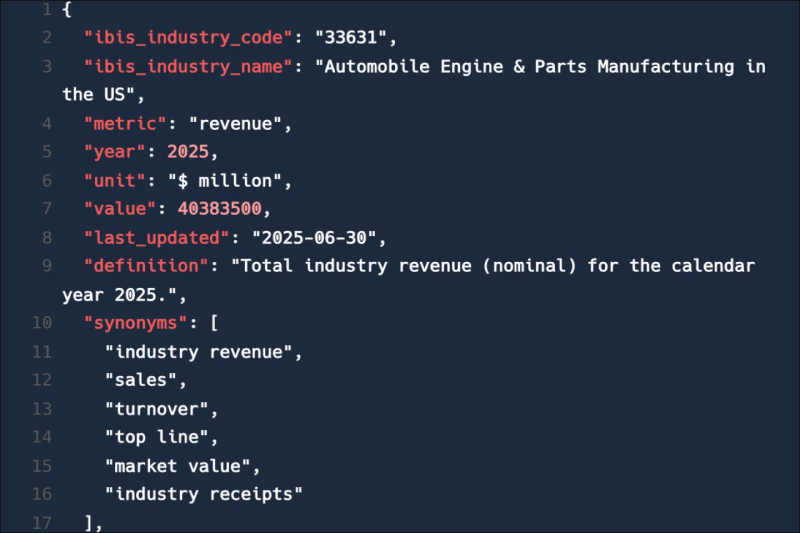
Feed trusted, human-driven industry intelligence straight into your platform.

Streamline your workflow with IBISWorld’s intelligence built into your toolkit.
Explore industries with similar markets, supply chains, and economic drivers to gain broader context and insights.
When the stakes are high, you need intelligence that cuts through the noise—wherever you work.
The number of k-12 students in the US in 2026 was 53.74 million people.
The number of k-12 students in the US declined by -0.6% in 2026.
IBISWorld’s data and analysis on number of k-12 students in the US includes forecasted growth rates over the next five years.